Tennis elbow is one of the most common overuse injuries we see at the clinic. It causes pain on the outside of the elbow and can make simple daily tasks feel surprisingly difficult. Think lifting a coffee cup or turning a door handle.
The good news? It’s very manageable — and a tennis elbow brace can make a real difference.
What Is Tennis Elbow?
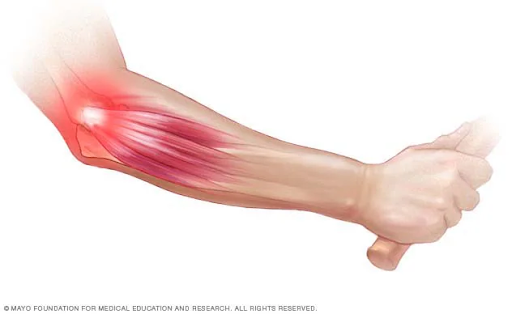
Tennis elbow is also known as lateral epicondylitis. It occurs when the tendons attached to the bony outer part of your elbow become inflamed or develop small tears. These tendons control wrist and finger movement. So when they’re overloaded, pain follows.
It’s more common than you might think. Tennis players, carpenters, painters, plumbers, and office workers are all regularly affected.
What Causes It?
The main cause is repetitive motion of the wrist and forearm. Over time, these repeated movements create microscopic tears in the tendon.
Common triggers include:
Backhand strokes in tennis or racquet sports
Using hand tools like screwdrivers or hammers
Typing or using a computer mouse for long periods
Lifting weights
Repetitive tasks like gardening or painting
What Are the Symptoms?
Symptoms usually build gradually. At first, you might notice mild discomfort. However, without treatment, it can become severe enough to affect your daily life.
Look out for:
Pain or burning on the outer elbow
Weak grip strength
Difficulty holding items
Morning stiffness
Pain that worsens with gripping, twisting, or lifting
Pain that refers into the forearm and wrist
How Is It Diagnosed?
An osteopath diagnoses tennis elbow through a physical examination. In some cases, imaging likeultrasound or an MRI scan may be used. These help rule out other conditions such as arthritis, nerve compression, or fracture.
Treatment and Management Options
1. Rest and Activity Modification First, reduce or avoid the activities making your elbow worse. This gives the tendon a chance to settle.
2. Manual Therapy An osteopath can provide hands-on treatment and guide you through targeted stretches and strengthening exercises for your forearm muscles.
3. Tennis Elbow Brace A tennis elbow brace reduces strain on the affected tendon during daily activities. It’s a simple, effective tool that supports your recovery.
Why Use a Tennis Elbow Brace?
A quality brace can be a game-changer. It gives you the support you need to keep moving, working, and playing sport.
Here’s what it does:
Reduces tendon strain during everyday activities
Relieves pain by taking pressure off overworked tendons
Supports healing and speeds up recovery
Keeps you active and boosts confidence with movement
Easy to wear — fits under clothing, so support goes with you anywhere
How to Wear It
Using a tennis elbow brace correctly makes all the difference.
Place the brace just below your elbow joint
Adjust for a snug — but not too tight — fit
Wear it during activities that usually trigger pain, like typing, lifting, or playing tennis
Prevention Tips
Once you’re on the mend, it’s worth protecting yourself going forward. Here’s how:
Warm up before exercise
Strengthen your forearm muscles regularly
Maintain good ergonomics at your desk
Use correct technique in racquet sports and weightlifting
Take regular breaks from repetitive tasks
Our Recommended Brace
We stock the Procare Tennis Elbow Brace in our online shop. It features:
Important: A brace alone won’t fix the problem. For the best results, combine it with targeted stretches, strengthening exercises, and hands-on osteopathic care.
We recommend booking with one of our registered osteopaths for personalised advice and a tailored treatment plan. We’re here to help you recover well and get back to doing what you love.
You’ve finished your treatment plan. Your back pain is gone. You’re moving well, sleeping better, and getting back to the things you love.
So… do you still need to see your osteopath?
It’s one of the most common questions we hear. And it’s...
Injury prevention is every athlete’s dream. Imagine being able to do what you love—exercise, sport, outdoor activities—without getting injured. While that sounds ideal, the reality is a bit more complex.
Your core is a group of muscles that sit in your torso. They stabilise and control the pelvis and spine. When most people think of their core, they picture a chiselled six?pack. In reality, the core goes much ...
read more
Websites store cookies to enhance functionality and personalise your experience. You can manage your preferences, but blocking some cookies may impact site performance and services.
Essential cookies enable basic functions and are necessary for the proper function of the website.
Name
Description
Duration
Cookie Preferences
This cookie is used to store the user's cookie consent preferences.
30 days
These cookies are needed for adding comments on this website.
Name
Description
Duration
comment_author
Used to track the user across multiple sessions.
Session
comment_author_email
Used to track the user across multiple sessions.
Session
comment_author_url
Used to track the user across multiple sessions.
Session
Google reCAPTCHA helps protect websites from spam and abuse by verifying user interactions through challenges.
Name
Description
Duration
_GRECAPTCHA
Google reCAPTCHA sets a necessary cookie (_GRECAPTCHA) when executed for the purpose of providing its risk analysis.
179 days
Google Tag Manager simplifies the management of marketing tags on your website without code changes.
Name
Description
Duration
cookiePreferences
Registers cookie preferences of a user
2 years
td
Registers statistical data on users' behaviour on the website. Used for internal analytics by the website operator.
session
Statistics cookies collect information anonymously. This information helps us understand how visitors use our website.
Google Analytics is a powerful tool that tracks and analyzes website traffic for informed marketing decisions.
ID used to identify users for 24 hours after last activity
24 hours
_gat
Used to monitor number of Google Analytics server requests when using Google Tag Manager
1 minute
_gac_
Contains information related to marketing campaigns of the user. These are shared with Google AdWords / Google Ads when the Google Ads and Google Analytics accounts are linked together.
90 days
__utma
ID used to identify users and sessions
2 years after last activity
__utmt
Used to monitor number of Google Analytics server requests
10 minutes
__utmb
Used to distinguish new sessions and visits. This cookie is set when the GA.js javascript library is loaded and there is no existing __utmb cookie. The cookie is updated every time data is sent to the Google Analytics server.
30 minutes after last activity
__utmc
Used only with old Urchin versions of Google Analytics and not with GA.js. Was used to distinguish between new sessions and visits at the end of a session.
End of session (browser)
__utmz
Contains information about the traffic source or campaign that directed user to the website. The cookie is set when the GA.js javascript is loaded and updated when data is sent to the Google Anaytics server
6 months after last activity
__utmv
Contains custom information set by the web developer via the _setCustomVar method in Google Analytics. This cookie is updated every time new data is sent to the Google Analytics server.
2 years after last activity
__utmx
Used to determine whether a user is included in an A / B or Multivariate test.
18 months
_ga
ID used to identify users
2 years
_gali
Used by Google Analytics to determine which links on a page are being clicked
30 seconds
Marketing cookies are used to follow visitors to websites. The intention is to show ads that are relevant and engaging to the individual user.
Google Maps is a web mapping service providing satellite imagery, real-time navigation, and location-based information.
Share this news article online