Chronic Pain and the Brain: Fear, Catastrophising and Your P
Chronic Pain Syndrome a complex, multifactorial condition that affects around 1 in 5 Australians over the age of 45. It is the th...
read more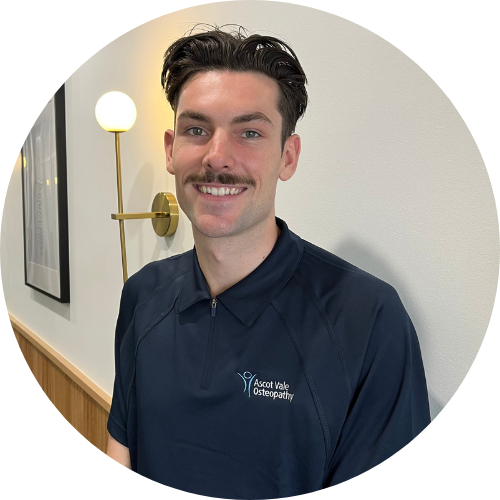
Dr Harry Williams’ interest in Osteopathy initially sparked after seeing an Osteopath for the first time. He was intrigued by the holistic approach that the Osteopath took and how effective it was for his injury. This developed an enthusiasm to help people get back to doing what they love after an injury, the same way his Osteopath enabled him to do so.
Harry studied at Victoria University and graduated with a Bachelor of Science (Osteopathy) and a Master of Health Science (Osteopathy). Harry’s approach to treatment encompasses education, manual therapy, rehabilitation and biomechanics. He enjoys treating a range of conditions from acute achilles injuries to rib pain.
Harry has always had a passion for sports – in particular athletics – spending most of his free time training and travelling around Australia to compete in the long jump. Harry’s sporting experience has developed a keen interest in treating other athletes and provided a space for the practical application of the theory he learnt at University.
Chronic Pain Syndrome a complex, multifactorial condition that affects around 1 in 5 Australians over the age of 45. It is the th...
read moreReturn to play ankle brace An ankle sprain can be surprisingly disruptive. You can’t “r...
read moreHave you ever wondered why your osteopath asks you to walk back and forth while carefully observing your every step? We promise it’s not just for entertainment purposes or to make you feel self-conscious. Gait analysis is...
read moreIn recent years, cardiovascular diseases have become a leading cause of morbidity and mortality worldwide. Among the numerous factors contributing to these conditions, LDL cholesterol has gained significant attention. LDL, or ...
read morePsoas is a strong and powerful muscle, yet often overlooked, and tt can be responsible for a host of ailments. The Psoas muscle originates from the T12 and Lumbar spinal segments, where it blends in with fibers of the diaphragm (your primary breathing ...
read more
Share this news article online