Request an Appointment

    Full name

    Phone Number

    Email

    Preferred Date

    Preferred Time

    New or existing client

    NewExisting

    Practitioner

    AnyDr Fiona McIntyreDr Matthias HouvenagelDr Chelsey Kedmenec

    Additional Information

    How We Use Ankle Braces in End-Stage Rehab: Supporting Your Comeback, Step by Step Home / Products / How We Use Ankle Braces in End-Stage Rehab: Supporting Your Comeback, Step by Step
    Return to play ankle brace

    Return to play ankle brace
    An ankle sprain can be surprisingly disruptive. You can’t “rest” your ankle the way you can rest a shoulder—because you rely on it for everything: work, sport, school runs, and even walking the dog.

    At Ascot Vale Osteopathy, we help people across Ascot Vale and Melbourne’s inner north rebuild strength, stability, and confidence after ankle injuries—so you can return to sport (or life) without feeling fragile.
    In the final phase of recovery—end-stage rehab (return to play)—ankle braces can be a smart tool to support your comeback.

    The Final Stretch: What Is End-Stage Rehab (Return to Play)?

    Rehab is a progression:
    • Early stage: reduce pain and swelling, restore basic range of motion
    • Mid stage: rebuild strength, balance, and control
    • End stage (return to play): prepare your ankle for real-world demands—speed, change of direction, uneven ground, jumping, and fatigue
    This stage is where we “stress test” your ankle safely and build the confidence you need to trust it again.

    Why We Use Ankle Braces in End-Stage Rehab

    An ankle brace isn’t a sign of weakness. Think of it like a seatbelt or a spotter at the gym—not because you expect something to go wrong, but because you want to push safely while you rebuild.

    1) Building Confidence, One Step at a Time

    After an ankle injury, your nervous system often stays on high alert. Even when the tissue is healing well, your brain may still be thinking:
    • “What if I roll it again?”
    • “Is it actually strong enough?”
    A brace provides external support that can reduce fear, improve confidence, and help you commit to movement—especially during higher-level drills.

    2) Bridging the Gap Between Clinic Rehab and Real Life

    The clinic is controlled. Real life isn’t.
    Uneven footpaths, slippery ovals, netball landings, sudden pivots—these are the moments that test your ankle. We often use a brace during the first return to running, agility, and sport-specific training, so you can expose the ankle to real demands with an extra layer of protection.

    3) Supporting Better Movement Patterns (Without Over-Restricting)

    Not all ankle braces are equal. Some restrict too much movement and can reduce the “work” your stabilising muscles need to do.
    We choose braces that support stability while still allowing enough movement for your ankle to:
    • retrain balance and proprioception
    • rebuild reactive strength
    • improve control during change-of-direction tasks
    The goal is support + training, not immobilisation.

    4) Matched to Your Sport, Goals, and Ankle

    There’s no one-size-fits-all brace.
    Your ideal brace depends on:
    • your injury history (first sprain vs recurring instability)
    • your sport (running vs netball vs footy vs hiking)
    • your current strength, balance, and confidence
    We’ll help you choose the right option, fit it properly, and use it strategically—and we’ll also plan your exit strategy (because bracing shouldn’t be forever).

    5) Empowering You for the Long Haul

    We’re big on education at Ascot Vale Osteopathy. Bracing is just one tool—best used alongside:
    • calf and foot strength
    • balance + proprioception training
    • hopping/landing mechanics
    • sport-specific conditioning
    Our aim is simple: you feel strong, capable, and confident without the brace—but you have it when it helps.

    Common Questions About Ankle Braces in Rehab

    Will wearing a brace make my ankle weaker?

    Used correctly, no. Bracing can help you train smarter during return to sport—especially when paired with strength and balance work.

    How long will I need to wear it?

    It depends on your sport, your ankle stability, and your confidence. Many people use a brace for the first few weeks back in higher-risk activities, then gradually wean off.

    Can I buy an ankle brace from your clinic?

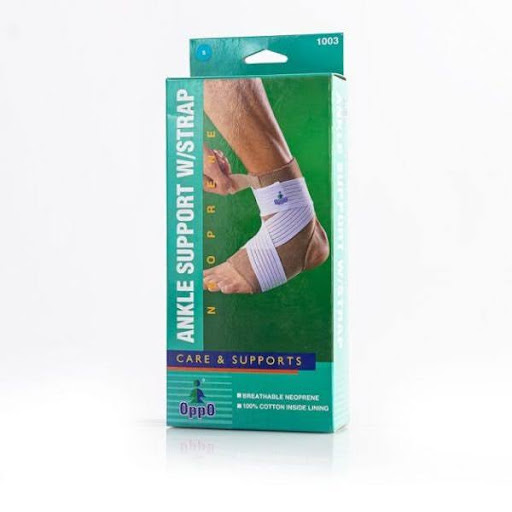
    Yes. We stock a range of quality ankle braces in our online shop, and our team can help you choose the right one.
    First-time orders get 10% off with code AVO10.

    Ready to Return to Sport With Confidence?

    At Ascot Vale Osteopathy, we combine hands-on care, movement-based rehab, and practical tools (like ankle braces) to help you return to the activities you love—safely and confidently.
    If you’re coming back from an ankle sprain or recurring ankle instability, book an appointment and we’ll map out your next steps.

    Leave a Comment

    Your email address will not be published, all comments are approved before posted

    YOU MAY ALSO LIKE...

    Protect Your Shoulders

    Let’s talk about one of the most functional, but prone to injury areas in the human body, the shoulder complex.

     Shoulder Anatomy

    The shoulder is comprised of three bo...

    read more