Keeping physically active is one of the most powerful things you can do for your health at any age. Many people say, “I used to be stronger, but now I’m getting old and frail,” or “being weak is just part of getting old.” If that sounds like you, here’s the good news: you’re not stuck that way. You are never too old to start, and getting older does not have to mean becoming weak.
You’re not “too old” to stay strong
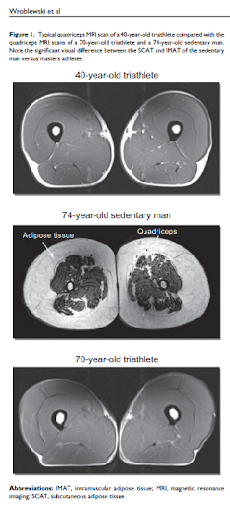
In 2011, a now?famous image from a study by Wroblewski et al. showed that a 70?year?old with an active lifestyle could maintain a significant amount of muscle mass and function. The study looked at master athletes and found that simple, consistent lifestyle habits can preserve most muscle mass and strength. The authors concluded that staying physically active should be encouraged throughout life.
A more recent example is the Doc Morris commercial that went viral: a grandfather trains with a kettlebell so he can lift his granddaughter easily. It’s a powerful reminder that staying fit and strong isn’t just about you—it’s also about the people you love and the life you want to live.
Exercise and Chronic Pain
Osteopaths treat chronic pain every day. It’s complicated, frustrating and often feels never?ending. But exercise can help.
Research shows that the benefits of exercise for pain can occur even without big changes in strength, endurance or flexibility. So when people ask, “What exercise is best for chronic pain?” the honest answer is: the one you will actually do and enjoy. Anything that gets you moving is a win.
That might be:
Walking regularly
Gentle strength training
Swimming or cycling
Yoga, Pilates or tai chi
You don’t have to smash yourself in the gym or run marathons. Even light, regular movement can have a positive effect on chronic pain.
Exercise and chronic disease
When we talk about chronic diseases like cardiovascular disease, diabetes and some cancers, body mass index (BMI) often gets the attention. Higher BMI is linked with higher risk. But there’s another important factor: sedentary behaviour.
A review by Barnes (2012) found that even without changing BMI, simply increasing physical activity can reduce the risk of chronic illness. Regular movement is so powerful that as little as 75 minutes of light physical activity per week (that’s under 15 minutes a day) can reduce cardiovascular risk by around 14%.
Exercise and your immune system
During COVID?19, everyone was looking for ways to “boost” their immune system. One of the most effective tools has been here all along: regular physical activity.
Exercise can trigger positive changes at a cellular level. A review by Sallami et al. (2018) found that exercise can:
Increase T?cell activity
Improve neutrophil function
Enhance natural killer (NK) cell activity
These cells help your body fight off infections and other “nasties” you encounter day to day. In other words, consistent exercise can support a stronger, more responsive immune system.
Brains vs brawn? You can have both
Exercise doesn’t just help your body—it can help your brain too. Some studies suggest that physical activity can improve cognitive function and academic performance in both adults and adolescents.
For students, the constant battle between “keep studying” and “take a break” is real. But taking short, active breaks—like a brisk walk, some bodyweight exercises or a quick stretch—may help your brain absorb and recall information better. A systematic review by Li et al. looked at 10 studies and found that both new and ongoing exercise programs were associated with improvements in some aspects of cognition and academic performance. While more research is needed, the potential benefits far outweigh the risks.
Exercise and mental health
Finally, let’s talk about mental health—stress, anxiety and depression. These are serious conditions, and it’s important to seek support from qualified mental health professionals when needed. Lifestyle changes, including increased physical activity, can be a valuable part of a broader treatment plan.
A review by Mikkelsen et al. found evidence that exercise can help reduce symptoms of stress, anxiety and depression through both psychological and physiological pathways. Movement can provide structure, a sense of achievement, social connection and beneficial changes in brain chemistry.
The takeaway? You’re never too old, too unfit or too “busy” to start moving more. Physical activity doesn’t have to be extreme to be effective. Small, consistent changes—like walking more, lifting light weights, or doing a short home routine—can make a real difference to your strength, pain levels, immune system, brain and mood.
References
Borisovskaya A, Chmelik E, Karnik A. Exercise and Chronic Pain. Adv Exp Med Biol. 2020;1228:233-253. doi: 10.1007/978-981-15-1792-1_16. PMID: 32342462.
Andrew P. Wroblewski, Francesca Amati, Mark A. Smiley, Bret Goodpaster & Vonda Wright (2011) Chronic Exercise Preserves Lean Muscle Mass in Masters Athletes, The Physician and Sportsmedicine, 39:3, 172-178, DOI: 10.3810/psm.2011.09.1933
Li JW, O’Connor H, O’Dwyer N, Orr R. The effect of acute and chronic exercise on cognitive function and academic performance in adolescents: A systematic review. J Sci Med Sport. 2017 Sep;20(9):841-848. doi: 10.1016/j.jsams.2016.11.025. Epub 2017 Jan 24. PMID: 28185806.
Mikkelsen K, Stojanovska L, Polenakovic M, Bosevski M, Apostolopoulos V. Exercise and mental health. Maturitas. 2017 Dec;106:48-56. doi: 10.1016/j.maturitas.2017.09.003. Epub 2017 Sep 7. PMID: 29150166.
Barnes AS. Obesity and sedentary lifestyles: risk for cardiovascular disease in women. Tex Heart Inst J. 2012;39(2):224-7. PMID: 22740737; PMCID: PMC3384027.
Sellami M, Gasmi M, Denham J, Hayes LD, Stratton D, Padulo J, Bragazzi N. Effects of Acute and Chronic Exercise on Immunological Parameters in the Elderly Aged: Can Physical Activity Counteract the Effects of Aging? Front Immunol. 2018 Oct 10;9:2187. doi: 10.3389/fimmu.2018.02187. PMID: 30364079; PMCID: PMC6191490.
Breathing is one of the most basic and fundamental functions of the human body, yet many of us don’t do it well. We often ignore our breathing until it becomes uncomfortable or abnormal. What we don’t always realise is how important our breath is for ...
Your core is a group of muscles that sit in your torso. They stabilise and control the pelvis and spine. When most people think of their core, they picture a chiselled six?pack. In reality, the core goes much ...
read more
Have you ever wondered why your osteopath asks you to walk back and forth while carefully observing your every step? We promise it’s not just for entertainment purposes or to make you feel self-conscious. Gait analysis is...
Websites store cookies to enhance functionality and personalise your experience. You can manage your preferences, but blocking some cookies may impact site performance and services.
Essential cookies enable basic functions and are necessary for the proper function of the website.
Name
Description
Duration
Cookie Preferences
This cookie is used to store the user's cookie consent preferences.
30 days
These cookies are needed for adding comments on this website.
Name
Description
Duration
comment_author
Used to track the user across multiple sessions.
Session
comment_author_email
Used to track the user across multiple sessions.
Session
comment_author_url
Used to track the user across multiple sessions.
Session
Google reCAPTCHA helps protect websites from spam and abuse by verifying user interactions through challenges.
Name
Description
Duration
_GRECAPTCHA
Google reCAPTCHA sets a necessary cookie (_GRECAPTCHA) when executed for the purpose of providing its risk analysis.
179 days
Google Tag Manager simplifies the management of marketing tags on your website without code changes.
Name
Description
Duration
cookiePreferences
Registers cookie preferences of a user
2 years
td
Registers statistical data on users' behaviour on the website. Used for internal analytics by the website operator.
session
Statistics cookies collect information anonymously. This information helps us understand how visitors use our website.
Google Analytics is a powerful tool that tracks and analyzes website traffic for informed marketing decisions.
ID used to identify users for 24 hours after last activity
24 hours
_gat
Used to monitor number of Google Analytics server requests when using Google Tag Manager
1 minute
_gac_
Contains information related to marketing campaigns of the user. These are shared with Google AdWords / Google Ads when the Google Ads and Google Analytics accounts are linked together.
90 days
__utma
ID used to identify users and sessions
2 years after last activity
__utmt
Used to monitor number of Google Analytics server requests
10 minutes
__utmb
Used to distinguish new sessions and visits. This cookie is set when the GA.js javascript library is loaded and there is no existing __utmb cookie. The cookie is updated every time data is sent to the Google Analytics server.
30 minutes after last activity
__utmc
Used only with old Urchin versions of Google Analytics and not with GA.js. Was used to distinguish between new sessions and visits at the end of a session.
End of session (browser)
__utmz
Contains information about the traffic source or campaign that directed user to the website. The cookie is set when the GA.js javascript is loaded and updated when data is sent to the Google Anaytics server
6 months after last activity
__utmv
Contains custom information set by the web developer via the _setCustomVar method in Google Analytics. This cookie is updated every time new data is sent to the Google Analytics server.
2 years after last activity
__utmx
Used to determine whether a user is included in an A / B or Multivariate test.
18 months
_ga
ID used to identify users
2 years
_gali
Used by Google Analytics to determine which links on a page are being clicked
30 seconds
Marketing cookies are used to follow visitors to websites. The intention is to show ads that are relevant and engaging to the individual user.
Google Maps is a web mapping service providing satellite imagery, real-time navigation, and location-based information.


Share this news article online