Roll Out the Soreness: How to Recover from Spring Activities with Cork Massage Tools
The days are getting longer. The air has that fresh, crisp edge that makes you want to lace up your runners and get moving again. We get it — spring energy is real.
But here’s the thing. After weeks of less movement, your body adapts. Muscles tighten. Joints stiffen. And when the weather warms up, suddenly every weekend involves a beach run, a footy kick in the park, or finally tackling that bike trail.
The soreness that follows can catch you off guard. The good news? You don’t have to just sit with it. Recovery is something you can actively work on — every single day, at home.
Why Spring Leaves You So Sore
It’s not a sign you’ve done something wrong. It’s a sign your body is catching up.
Common post-activity complaints this time of year include:
- Tight calves and Achilles after jumping back into running
- Achy quads and IT band from hills, cycling, or increased distance
- Lower back stiffness from prolonged sitting then sudden activity
- Shoulder and neck tension from swimming, overhead sport, or poor posture during the week
The muscle soreness you feel is known as DOMS — delayed onset muscle soreness. It peaks around 24–72 hours after activity. So what you do in that window really matters.
Passive recovery (couch, heat pack, hope) works slowly. Active recovery works faster.
Enter: Cork Massage Tools
This is where our Cork Massage Ball and Cork Peanut Roller come in. They’re genuinely game-changers for post-activity recovery.
Cork is naturally antimicrobial, sustainable, and firm. It delivers real therapeutic pressure without breaking down like foam. These aren’t gimmicks. In fact, they’re tools our osteopaths actively recommend to patients in clinic.
Cork Massage Ball — Your Go-To for Targeted Relief
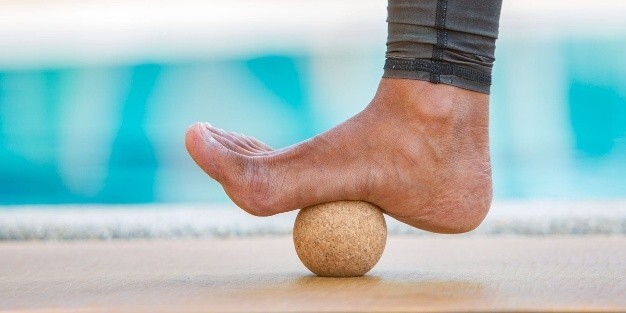
The Cork Massage Ball is small, firm, and incredibly precise. Think of it as your own on-demand trigger point tool.
It works best for:
- Plantar fascia and foot arch — stand on it, apply gentle weight, and roll slowly along the sole after a run
- Glutes and piriformis — sit on it against a wall or chair to release deep hip tightness that contributes to lower back pain
- Chest and pec minor — place it between your chest and a wall to loosen up after swimming or overhead work
- Upper traps and shoulder blade area — lean into a wall and find those tender spots after a big training day
Here’s the rule of thumb: find the sore spot, hold for 20–30 seconds, breathe into it, and let the tissue release. Don’t rush it.
Cork Peanut Roller — Full-Spine, Full-Body Relief
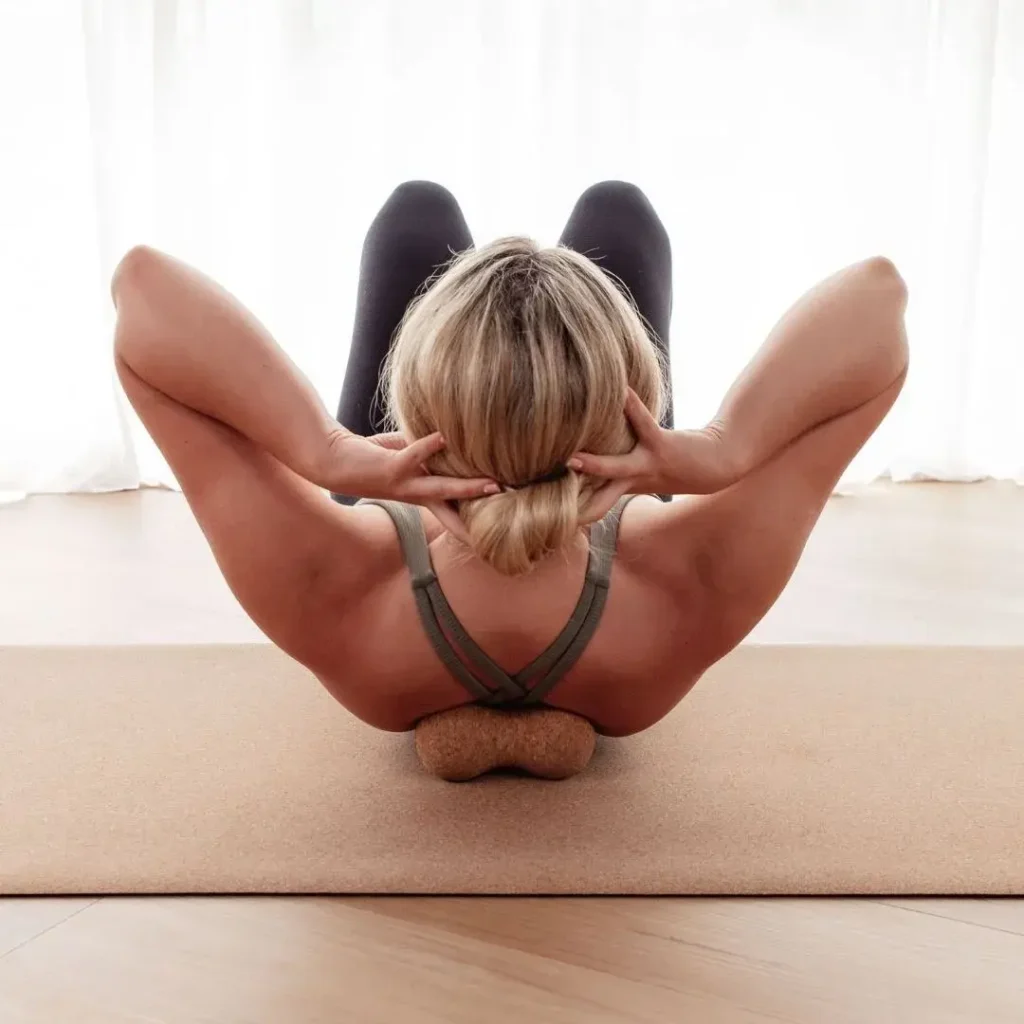
The Cork Peanut Roller is two balls fused together. It sits either side of the spine, so you can mobilise your mid-back without putting direct pressure on the vertebrae.
It works best for:
- Thoracic spine mobility — lie on the floor, place it under your mid-back, and extend over it to open up the chest and spine
- Hamstrings and calves — sit on the floor and roll slowly down the back of your legs after running or cycling
- Neck base and upper back — use it just below the base of your skull to release tension headaches and post-sport neck stiffness
- Hip flexors — use it face-down to target the front of the hip after cycling or prolonged sitting
Five to ten minutes with the Peanut Roller after activity is worth more than most static stretching sessions.
When to Use Them
Timing matters. Here’s when to reach for your cork tools:
- Post-activity — within an hour of finishing, while the tissue is still warm
- Next-day soreness — use them in the morning to kick-start circulation and reduce stiffness
- Pre-bed wind down — gentle rolling calms the nervous system and improves sleep quality after a big day
Pair Them with Professional Care
Self-care tools are powerful. However, they work even better alongside osteopathic treatment.
If you have a persistent niggle, asymmetry, or recurring tightness that rolling alone doesn’t shift, that’s a signal worth investigating properly.
Our team at Ascot Vale Osteopathy will identify why the tension keeps coming back. Together, we’ll build a recovery plan that actually sticks.
Shop our Cork Massage Ball and Cork Peanut Roller in our online store HERE — and use code AVO10 for 10% off your first order.
Or book an appointment with our team on 03 9370 4033. Let’s keep you moving all spring long.
YOU MAY ALSO LIKE...
What to Expect During Your First Osteopathy Appointment
What to Expect During Your First Osteopathy Appointment
Booking your first osteopathy appointment can feel equal parts hopeful and a bit unknown. Will it hurt? Do you need scans? Will you be told to “just rest”? At Ascot Vale Osteopathy, we ... read moreTake A Deep Breath
Breathing is one of the most basic and fundamental functions of the human body, yet many of us don’t do it well. We often ignore our breathing until it becomes uncomfortable or abnormal. What we don’t always realise is how important our breath is for ...
read moreInjury Prevention: How accurate can we be?
Injury prevention is every athlete’s dream. Imagine being able to do what you love—exercise, sport, outdoor activities—without getting injured. While that sounds ideal, the reality is a bit more complex.
Can we rea... read more
Why Do Things Hurt When We Sit All Day?
Modern life and advancing technology have pushed many of us into a more sedentary lifestyle. During COVID?19 lockdowns, a typic...
read more
Overtraining: Understanding the Causes, Effects, and Prevent
read more
The Perfect Bra for Your Recovery
When you’ve had an injury or are recovering from breast surgery, it’s common to experience limited movement and mobility. W...
read more
Our Philosophy of Care: Empowering You to Heal
We believe your body can heal
At Ascot Vale Osteopathy, our philosophy starts with a simple belief: everybody has the capacity to heal. read moreLove your knees!
The knee joint is the largest joint in the human body. It is also quite complex, as it is actually made up of two joints. Three...
read more
Share this news article online