Injury Prevention: How accurate can we be?
Injury prevention is every athlete’s dream. Imagine being able to do what you love—exercise, sport, outdoor activities—without getting injured. While that sounds ideal, the reality is a bit more complex.
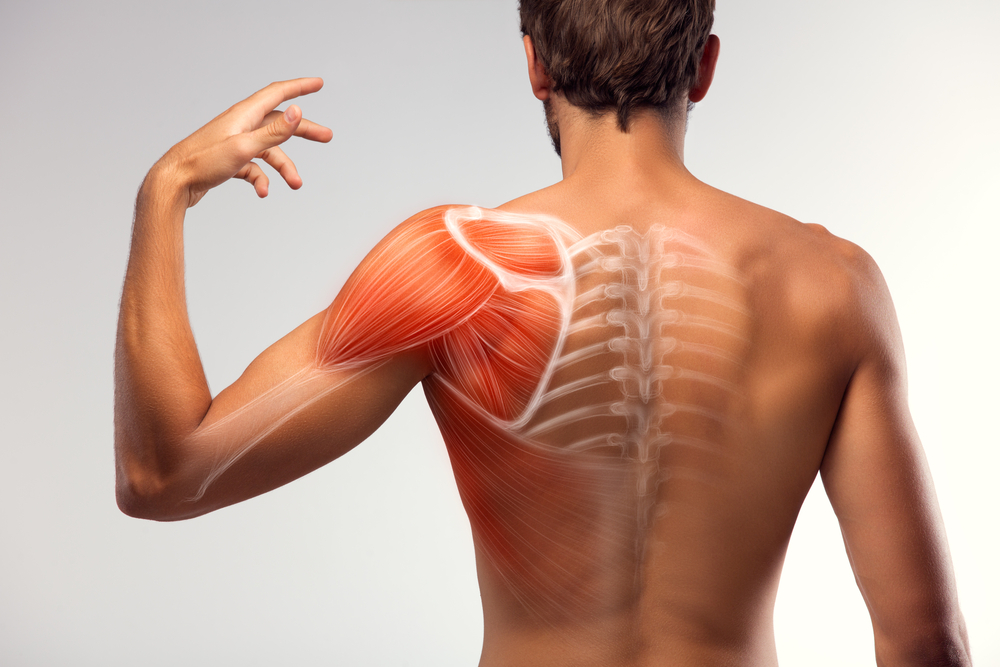
Let’s talk about one of the most functional, but prone to injury areas in the human body, the shoulder complex.
Shoulder Anatomy
The shoulder is comprised of three bones – the Clavicle (collar bone), Scapula (shoulder blade) and the Humerus (arm bone), which articulate to create 3 separate joints. The Sternoclavicular (SC) joint, the Acromioclavicular (AC) joint and the Glenohumeral Joint (GH).

The “ball and socket joint” of the shoulder, which is an articulation between the humeral head (ball) and the glenoid fossa (socket), is aptly named the Glenohumeral joint. This joint has the most range of motion out of any joint in the human body, but that range of motion comes at a cost. That cost being instability.
In and around the shoulder are two groups of muscles that work synergistically to produce movement and stability. The intrinsic muscle group, the rotator cuff, surrounds the scapular and attaches onto the Humerus. It is involved with the intricate movements of the shoulder, such as rotation of your arm. It also helps stabilize the humeral head by “pulling” it into the glenoid fossa.
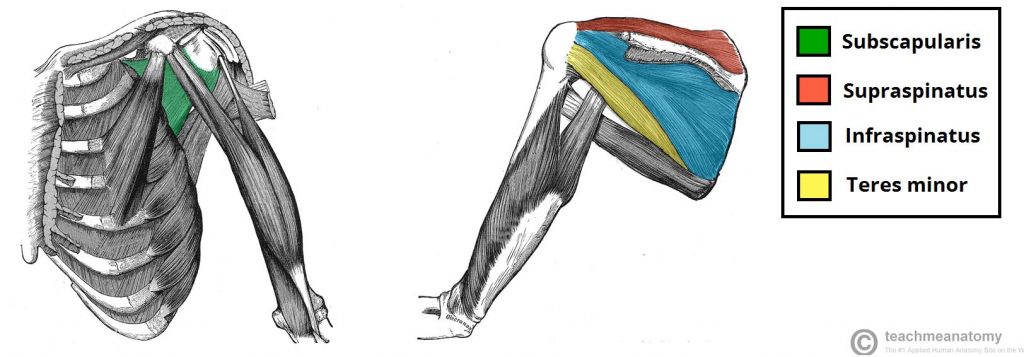
The extrinsic muscle group is comprised of muscles that originate from the torso and insert onto the bones of the shoulder. These muscles are responsible for the big, global movements of the shoulder, such as reaching above your head, swinging a golf club or throwing a ball.

Common Problems of the Shoulder
Because there are numerous structures that can cause pain around the shoulder, it can be difficult to ascertain the source of the problem. To reduce confusion, shoulder pain can usually be narrowed down to one of five categories:
Rotator cuff pathologies (strain, tear, tendinopathy) will present with pain in the shoulder and decreased range of motion, especially rotation. A common symptom associated with rotator cuff injury is impingement. Impingement occurs when inflamed tendons get “pinched” in the subacromial space, which is a passageway formed by the acromion, coracoacromial arch and AC joint, and sits just above the Glenohumeral joint. When reaching above your head or across your body, you may feel the pinching sensation through the front of your shoulder. Following a rotator cuff injury, simple tasks, like brushing your teeth, may feel like a monumental effort due to pain/weakness.
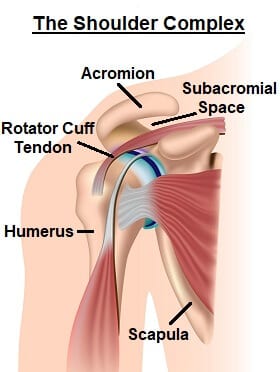
Shoulder Instability refers to the inability to maintain the humeral head (ball) in the glenoid fossa (socket). Damage to the ligamentous and/or muscular structures surrounding the shoulder can cause it to feel “loose”. Instability is commonly a result of repetitive overhead movements or a traumatic event such as a shoulder dislocation.
Shoulder stiffness is commonly felt after a shoulder injury and can indicate the shoulder is healing. When a shoulder progressively becomes stiffer over time, and you progressively lose range of motion, you may be dealing with adhesive capsulitis, “frozen shoulder”.
How to prevent shoulder injuries
If you want to avoid having an unstable, stiff or sore shoulder, there are a few principles to follow. Flexibility, rotator cuff strength, core strength and general strength around the shoulder are important in keeping your shoulders healthy. If your shoulders are healthy, you are less likely to suffer from shoulder injuries.
To help you out, I will provide a few simple exercises which only require you to have a theraband and a chair.

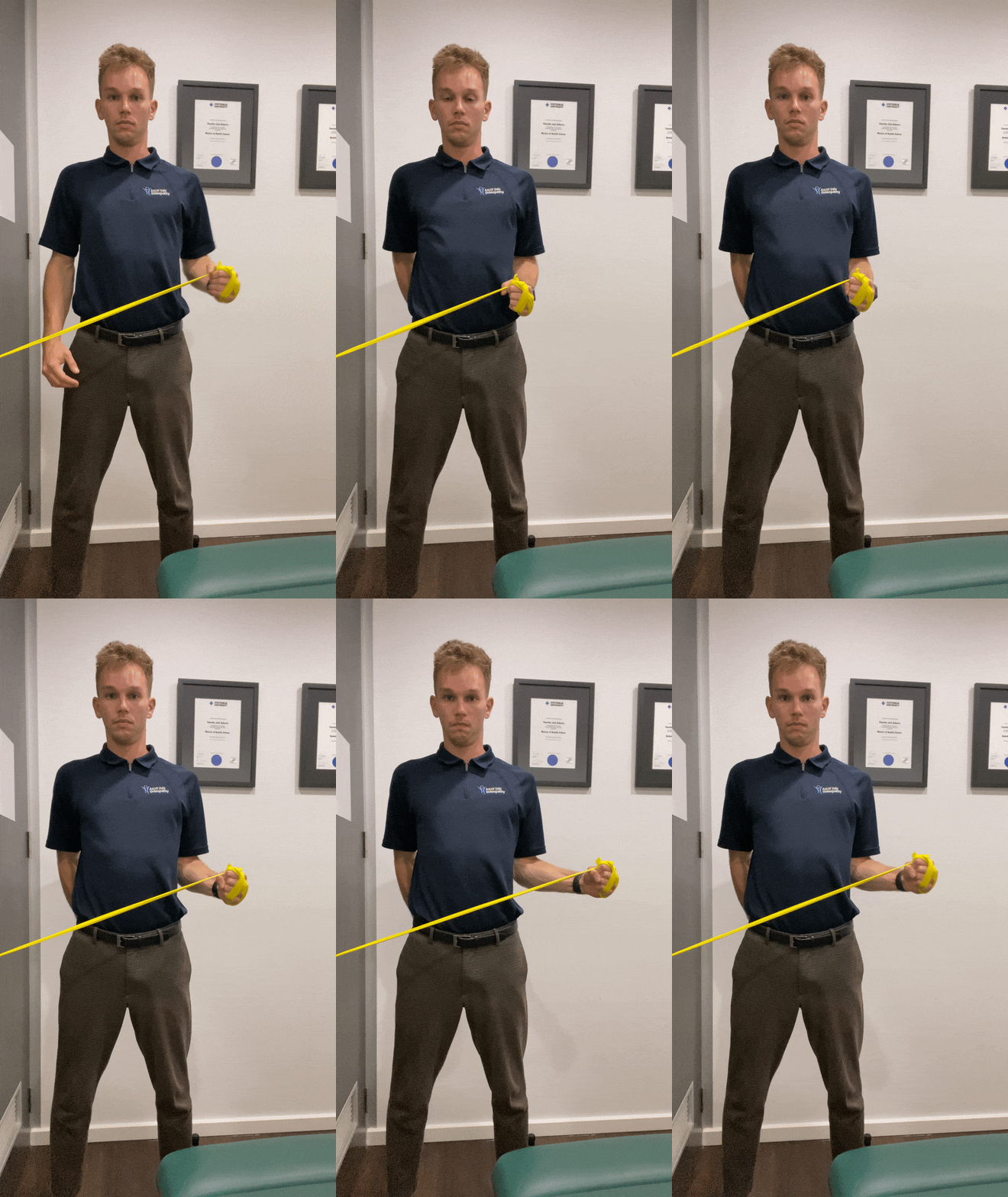

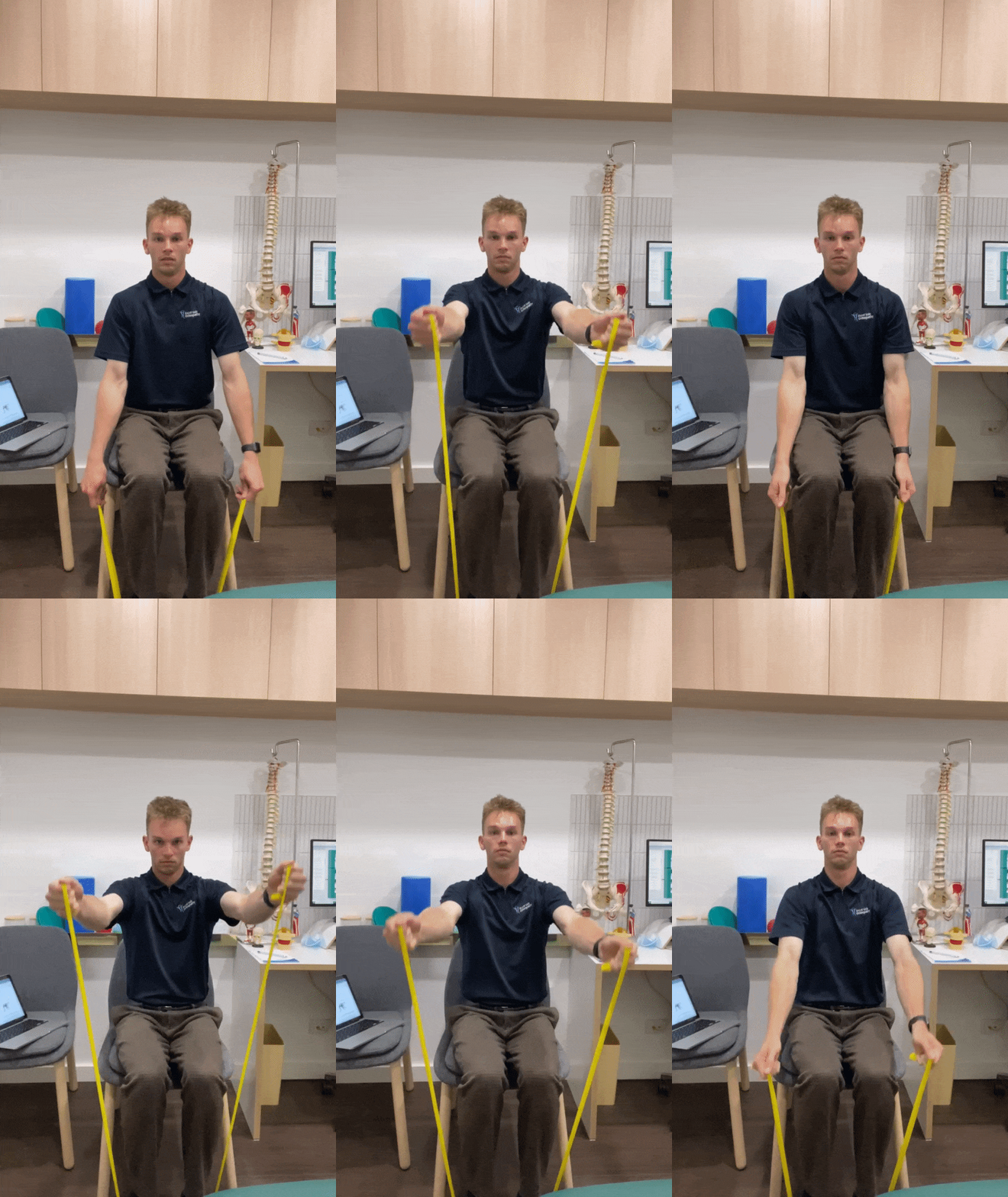

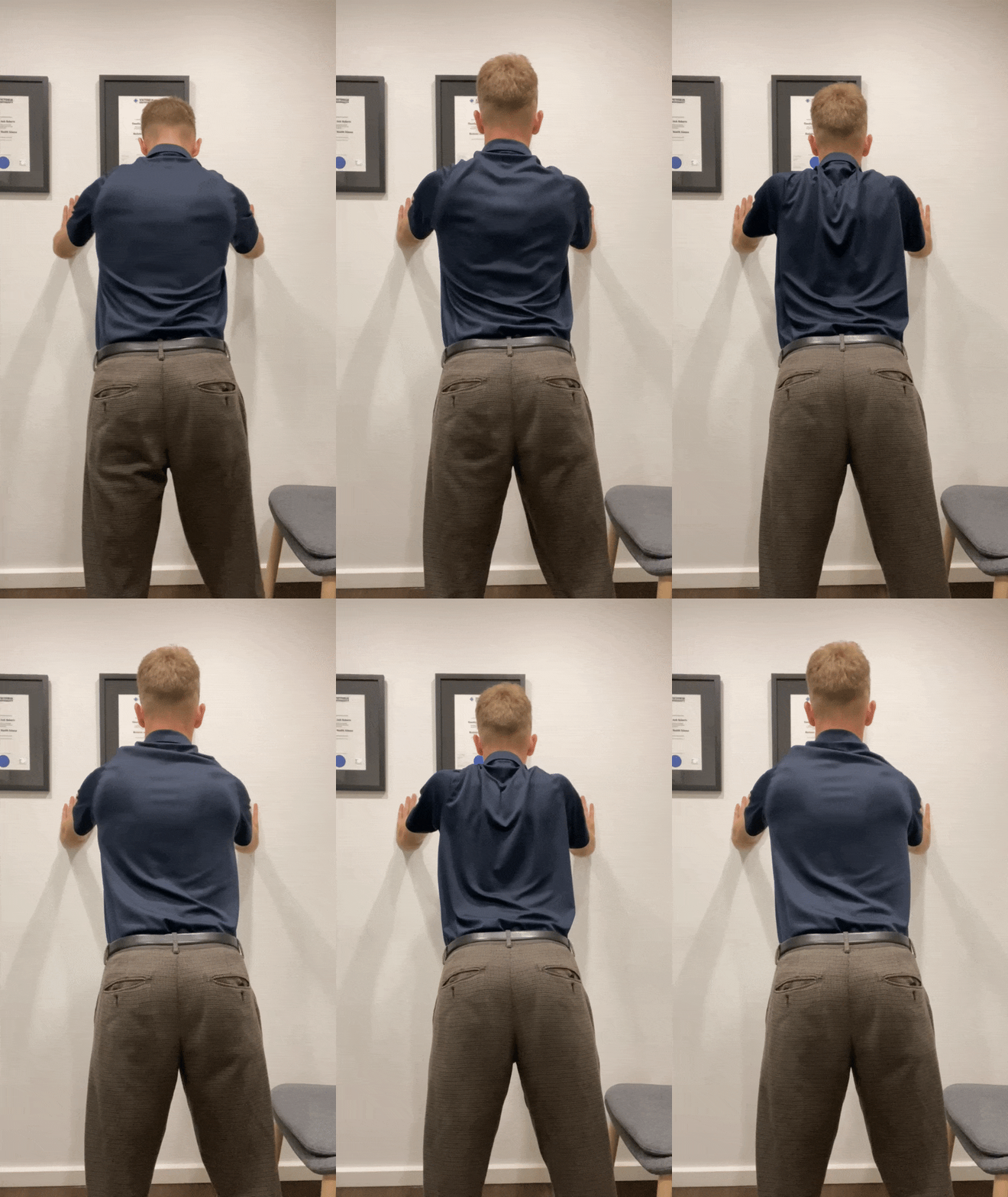
All together, these exercises take about 5 minutes to complete. You can either follow the rule of 3 sets, 10 reps each set, or you can complete each exercise until your arms/shoulders fatigue.
Having strong, healthy shoulders will make your life a lot easier. You use your shoulders so much, that they need to be strong to be able to deal with the demands of life.
You can purchase your own resistance band online HERE.
Injury prevention is every athlete’s dream. Imagine being able to do what you love—exercise, sport, outdoor activities—without getting injured. While that sounds ideal, the reality is a bit more complex.
Have you ever wondered why your osteopath asks you to walk back and forth while carefully observing your every step? We promise it’s not just for entertainment purposes or to make you feel self-conscious. Gait analysis is...
read moreChronic Pain Syndrome a complex, multifactorial condition that affects around 1 in 5 Australians over the age of 45. It is the th...
read more
Share this news article online